The Bouillons of Paris

Have you ever wondered when the first restaurants came about?
Well, of course, people have been selling food in a variety of ways for ages:
from carts on the street to roadside inns and taverns. But, according to most
experts, the original “sit down at a table, look at a menu, and order your meal”
type of establishments paralleled the growth of cities, notably in France.
Statistics show that before the start of the French Revolution in 1789 there
were fewer than 50 restaurants in Paris; twenty or so years later the number
had grown to over 3,000. These early locations were places of distinction
intended for the elite. By the mid-1800s, however, a completely new genre of
restaurant appeared: le bouillon.
 As its name suggests, a bouillon’s primary offering was a
broth, served with meat and vermicelli noodles. The idea originated, so it’s
said, with Pierre Louis Duval, a butcher at Les
Halles—the fresh food market formerly found in the French capital’s first
arrondissement. Duval decided to take leftover meat scraps and make hot,
one-dish meals to sell to fellow market workers as well as to the labor force
of the ongoing urban renewal program. The menu expanded and the quick, quality
food at affordable prices caught on big time— with the working class and wealthy
members of the bourgeoisie. Soon over 250 bouillons dotted the downtown
landscape. Some, extravagantly decorated in the popular Art Nouveau style of the
late nineteenth century, provided low-cost meals in a high-class setting.
As its name suggests, a bouillon’s primary offering was a
broth, served with meat and vermicelli noodles. The idea originated, so it’s
said, with Pierre Louis Duval, a butcher at Les
Halles—the fresh food market formerly found in the French capital’s first
arrondissement. Duval decided to take leftover meat scraps and make hot,
one-dish meals to sell to fellow market workers as well as to the labor force
of the ongoing urban renewal program. The menu expanded and the quick, quality
food at affordable prices caught on big time— with the working class and wealthy
members of the bourgeoisie. Soon over 250 bouillons dotted the downtown
landscape. Some, extravagantly decorated in the popular Art Nouveau style of the
late nineteenth century, provided low-cost meals in a high-class setting.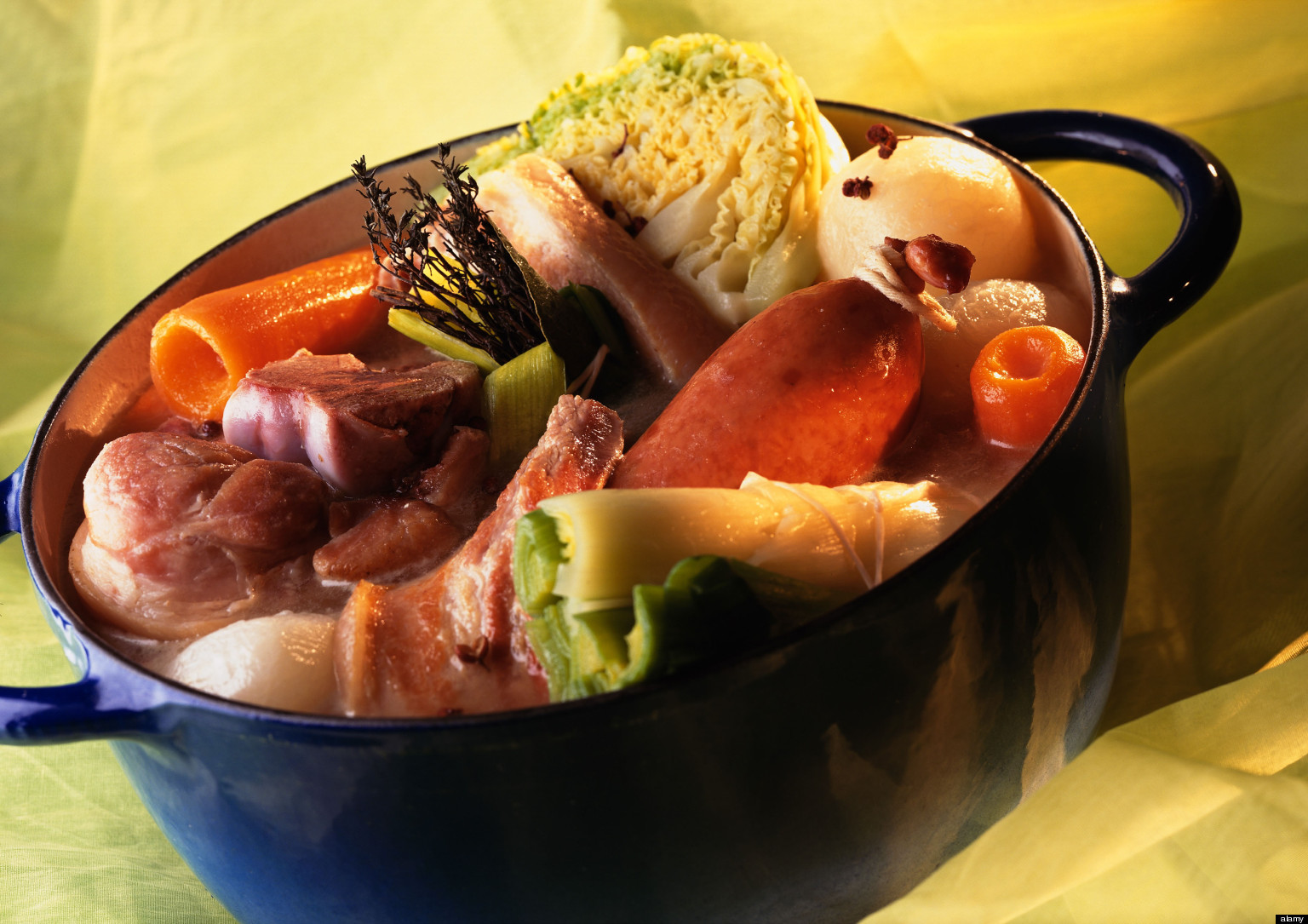 The good news is that some of these lavish restaurants have
been restored to their initial glory. Not only that. Due to what the contemporary
restaurant guide Le Fooding calls “le
rétrofoodisme,” bouillons are once again serving classic French cuisine at very
low prices. And since many modern French people don’t have the time to prepare their
old favorite comfort foods such as soupe
à l’oignon, pot-au-feu, and the
like, they are flocking to the new bouillons. Before Cheapo Snobs rush to
follow suit, though, let it be known that some Snobs have reported that the ambiance
is often much more appetizing than the actual meal!
The good news is that some of these lavish restaurants have
been restored to their initial glory. Not only that. Due to what the contemporary
restaurant guide Le Fooding calls “le
rétrofoodisme,” bouillons are once again serving classic French cuisine at very
low prices. And since many modern French people don’t have the time to prepare their
old favorite comfort foods such as soupe
à l’oignon, pot-au-feu, and the
like, they are flocking to the new bouillons. Before Cheapo Snobs rush to
follow suit, though, let it be known that some Snobs have reported that the ambiance
is often much more appetizing than the actual meal! Le Chartier, in
operation since 1896 at 7, rue du Faubourg Montmartre (9th), can
really give you a taste of old Paris. In keeping with tradition, the current prices
from starters to desserts are unbeatable; to give you an idea, main dishes like
confit de canard or blanquette de veau go from 8,50 to 13,50 euros…or about $9.50 to
$15. But some disappointed diners say that both the service and the food are
mediocre at best. Reviews are better for a revived branch of the Chartier across from the Montparnasse
train station (6th). The setting is even more spectacular, too, with
touches of brass and wood, tiled walls, and etched globe lights (pictured).
Le Chartier, in
operation since 1896 at 7, rue du Faubourg Montmartre (9th), can
really give you a taste of old Paris. In keeping with tradition, the current prices
from starters to desserts are unbeatable; to give you an idea, main dishes like
confit de canard or blanquette de veau go from 8,50 to 13,50 euros…or about $9.50 to
$15. But some disappointed diners say that both the service and the food are
mediocre at best. Reviews are better for a revived branch of the Chartier across from the Montparnasse
train station (6th). The setting is even more spectacular, too, with
touches of brass and wood, tiled walls, and etched globe lights (pictured). Two other old-timers are the Julien in the 10th and the Racine in the 6th. Both opened for business in 1906,
have been meticulously restored, and are designated historical landmarks. The Julien—with its mahogany bar, stained
glass, high ceilings, mirrors, and murals—was once the preferred spot of singer
Édith Piaf. The current version tries to live up to the original motto: “Ici
tout est beau, bon et pas cher” (“Everything here is beautiful, good, and not
expensive”). Unfortunately not everyone agrees with the “good” part for the cuisine.
One Trip Advisor reviewer, for instance, described his meal as “truck stop
food”! But at 20 euros for 3 courses and a glass of wine, I might give it a
whirl. The striking Racine (see photo) on the Left Bank is a bouillon in name only. Snobs might be tempted by the
surroundings, but neither they nor Cheapos would enjoy spending 50 euros for 3
unexceptional courses.
Two other old-timers are the Julien in the 10th and the Racine in the 6th. Both opened for business in 1906,
have been meticulously restored, and are designated historical landmarks. The Julien—with its mahogany bar, stained
glass, high ceilings, mirrors, and murals—was once the preferred spot of singer
Édith Piaf. The current version tries to live up to the original motto: “Ici
tout est beau, bon et pas cher” (“Everything here is beautiful, good, and not
expensive”). Unfortunately not everyone agrees with the “good” part for the cuisine.
One Trip Advisor reviewer, for instance, described his meal as “truck stop
food”! But at 20 euros for 3 courses and a glass of wine, I might give it a
whirl. The striking Racine (see photo) on the Left Bank is a bouillon in name only. Snobs might be tempted by the
surroundings, but neither they nor Cheapos would enjoy spending 50 euros for 3
unexceptional courses.
A newcomer, established November 2017, is located in
Montmartre across from the Pigalle métro stop…and is, in fact, called Bouillon Pigalle (18th). The
300-seat modern style restaurant is open seven days a week from noon to
midnight. And while lacking the Art Nouveau atmosphere, it gets rave reviews in
the food department. Everything is made on the premises with products from Rungis, the current version of Les Halles market. Three-course meals for
17 euros have made this place extremely popular, attracting from 800 to 1000
customers daily. If you go, get there before or past rush hours as they don’t
take reservations. Plans are to open a second branch this year at place de la République.

So, if you’re in the mood for home-style French cooking at a
bargain basement price, check out these bouillons. There’s sure to be something
satisfying for the Cheapo and the Snob.
For more about the French capital, take a look at my
recently published book—Pilgrimage to
Paris: The Cheapo Snob’s Guide to the City and the Americans Who Lived There.

Recent Comments